Whisky for beginners: five bottles that teach you everything
Most men who say they don't like whisky have only tried one kind. Five bottles, tasted in order, that show you what the fuss is about and what you actually like.
Most men who say they don’t like whisky have only tried one kind, usually at the wrong moment and in the wrong glass. Whisky is not one flavour. It can be all honey and citrus, or Christmas cake, or vanilla and toffee, or a beach bonfire. The fastest way to find what you like is to taste the differences side by side.
These five bottles do that. Each one teaches a single idea, and they go in order from gentlest to wildest. By the end you will know what you like, and you will be able to order with confidence anywhere in the world.
| Bottle | What it teaches | Expect |
|---|---|---|
| Glenmorangie The Original 12 | The bourbon cask | Vanilla, citrus, honey, peach |
| The GlenDronach 12 | The sherry cask | Raisin, orange, chocolate, spice |
| Buffalo Trace | American bourbon | Vanilla, brown sugar, toffee |
| Talisker 10 | The sea | Salt, pepper, a little smoke |
| Laphroaig 10 | Peat | Big smoke, seaweed, surprising sweetness |
The words you need
- Scotch must, by law, be distilled and matured in Scotland, in oak casks, for at least three years, and bottled at 40% alcohol or more.
- Single malt means made at one distillery, from water and malted barley, in copper pot stills. It doesn’t mean one barrel, and it doesn’t automatically mean better.
- Blended means one or more single malts mixed with one or more single grain whiskies. Plenty of blends are excellent.
- The age on the label is time spent in the cask. Whisky doesn’t mature in the bottle, so a 12 year old stays a 12 year old however long you keep it.
- Whisky or whiskey? Scotland uses “whisky”; Ireland and most American makers use “whiskey”. It is the same word.
The five bottles
1. Glenmorangie The Original 12: the bourbon cask
Start here. Most of a whisky’s flavour comes from the cask, and this shows what a bourbon cask does: vanilla, citrus, honey and peach, in a whisky that’s easy to like. It’s a Highland single malt at 40%, and worth knowing that it used to be a 10 year old; Glenmorangie now ages it for 12 years. It costs £40 on Glenmorangie’s own site.
2. The GlenDronach 12: the sherry cask
Now taste the same idea with a different cask. Also a Highland single malt, this one is aged for at least 12 years in Spanish Pedro Ximénez and Oloroso sherry casks, and bottled at 43%. The distillery describes sun-dried raisin, gingerbread and orange. Try it next to the Glenmorangie, and you will understand what wood does to a spirit better than any book could explain it.
3. Buffalo Trace: America
Cross the Atlantic. This Kentucky straight bourbon is aged in new, charred oak barrels, which gives a much bolder sweetness than Scotch: vanilla, brown sugar and toffee, at 45%. It’s also the bourbon we suggest for your home bar, so it will earn its keep in an Old Fashioned.
4. Talisker 10: the sea
Made on the Isle of Skye, this is the step between sweet and smoky. Expect salt and black pepper, with a thread of smoke behind them. If the first three seemed a little polite, this is often the bottle that makes people sit up.
5. Laphroaig 10: peat
Save this for last, because it will flatten anything you taste afterwards. Peat is the decayed vegetation burned to dry barley on Islay, and it gives the smoke that people either love or can’t stand. Laphroaig itself promises “a big peaty slap”, with hints of seaweed and a surprising sweetness. Don’t judge it on the first sip. Have a second one, a few minutes later.
You don’t have to like whisky. But you should know which one you don’t like.
How to taste it
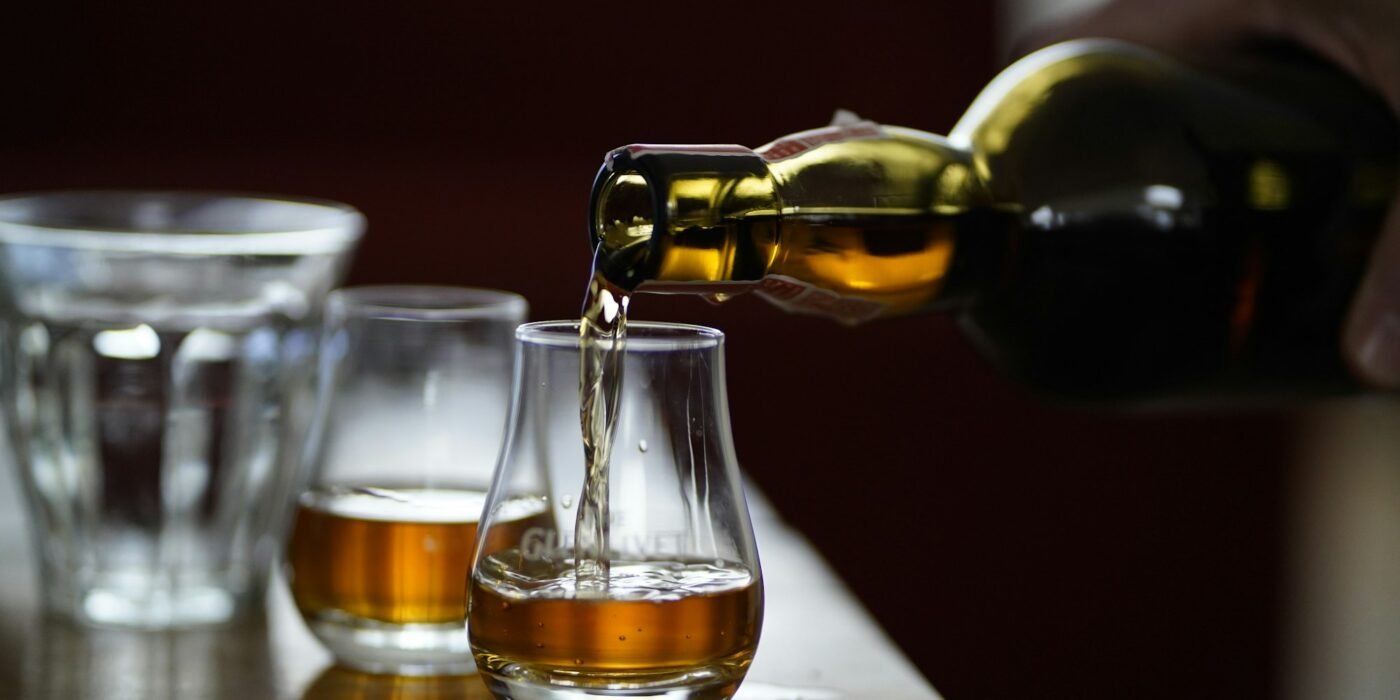
- Use the right glass. A small tulip-shaped glass gathers the aroma. A heavy tumbler looks the part, but you will smell far less.
- Pour a small measure. You’re tasting, not drinking. Have a glass of water beside you.
- Nose it gently. Keep your mouth slightly open and don’t push your nose into the glass; at this strength, it stings.
- Take a small sip and hold it. Let it cover your tongue for a few seconds before you swallow. The first sip is always a shock, so give the second one a fair hearing.
- Add a few drops of water. Then taste it again. It often opens up the flavour and takes away the burn.
Water, ice and other arguments
As the Scotch Whisky Association puts it, there is no “right” way to drink Scotch, and many people choose just a little water. Ice is fine too, if that’s what you like, though it dulls the flavour, and some whiskies turn cloudy with it, which does no harm. Anyone who tells you you’re drinking it wrong is telling you more about himself than about whisky.
How to do this properly
You don’t need to buy all five at once. Try them by the glass at a good whisky bar, or split the cost with friends and hold a tasting at home: five small measures, plenty of water and something to eat. Keep the pours small and take your time. The NHS advises not regularly drinking more than 14 units a week, and a single 25ml measure of 40% whisky is one unit. A good whisky is meant to be noticed, and you notice less with each glass.
Questions people ask
Is older whisky always better?
No. Older usually means more expensive and more influenced by the cask, but plenty of people prefer a lively 10 or 12 year old. Buy what you enjoy, not the biggest number.
How long does an opened bottle last?
Keep it upright, out of the sun, with the cork or cap on tight. A full bottle holds for years; once it’s less than a third full, the extra air will slowly change the flavour, so finish it within a few months.
Which should I buy first?
If you buy just one, make it the Glenmorangie. If you already know you like big flavours, go straight to the Talisker.
How we chose: the Scotch definitions are from the Scotch Whisky Association, and details of the Glenmorangie, GlenDronach, Buffalo Trace and Laphroaig are from each maker’s own site, checked on 1 November 2026. We couldn’t read Talisker’s product page, so that entry is our general description. We list a price only where the maker publishes one. The whiskies were not tasted for this guide. Please drink responsibly.