Black tie, properly: the rules and where you can bend them
Black tie is the kindest dress code ever devised, once you know the handful of rules. What to wear, where you can bend it, where you can't, and what it costs to own.
Black tie is the kindest dress code ever devised. It is a uniform, so nobody has to be clever, and it flatters almost every man who wears it. All you have to do is get a handful of small things right. Most of the men who get it wrong haven’t made a bold choice; they just didn’t know the rule they were breaking.
Here are the rules, taken from Debrett’s, the British etiquette authority, followed by where you can bend them and where you can’t. Then what it costs to own the whole outfit, which is less than you might fear.
| Piece | The rule |
|---|---|
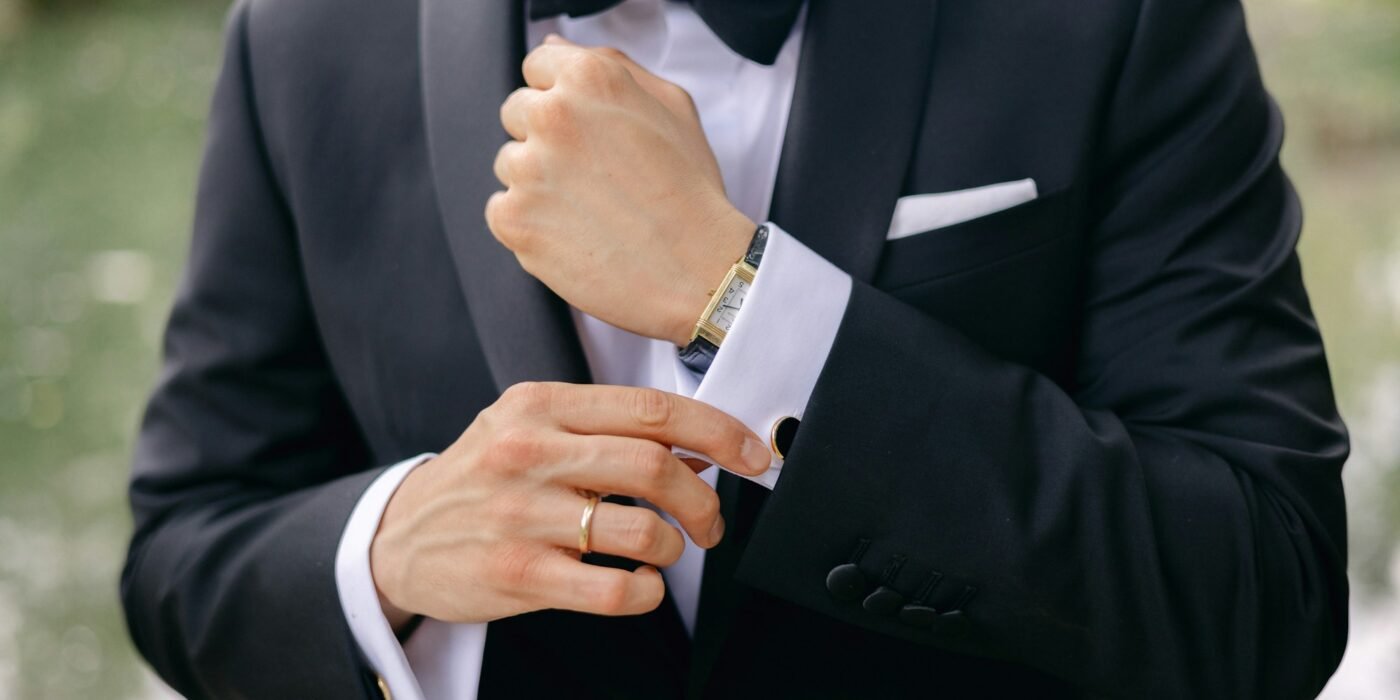
| Jacket | Black wool, single or double-breasted, silk peak lapels or a shawl collar, covered buttons |
| Trousers | Black, with a single row of braid down each outside leg |
| Shirt | White, with a turn-down collar and double cuffs, worn with cufflinks and studs |
| Tie | A black bow tie that you tie yourself |
| Shoes and socks | Black lace-ups, polished or patent, with black silk socks |
| Optional | A cummerbund or a waistcoat, never both; a white handkerchief in the left breast pocket |
What the invitation is telling you
Debrett’s lists several ways of saying the same thing: “black tie”, “dinner jackets”, “DJs” and “dress for dinner”, or “tuxedos” in America. A host who says “we’re going to change for dinner” traditionally means black tie too. All of them mean a dinner jacket. They don’t mean a dark suit with a bow tie, and they don’t mean white tie, which is a tailcoat and is always spelled out on the invitation.
If the invitation is vague, ask. As The Code has it, you are dressing for your hosts, and no host minds the question.
The outfit, piece by piece
The jacket
Debrett’s asks for black wool barathea or ultrafine herringbone, no vents, silk peak lapels or a shawl collar, and covered buttons. The lapels are what separate it from a suit. Notch lapels are the lapels of your office jacket. As for what to call it, Debrett’s insists on “dinner jacket, not dinner suit”, while Henry Poole, the Savile Row tailor, has a page of its own headed “The Dinner Suit”. You are safe with either.
The trousers
Black, with a natural taper and one row of braid down each outside leg. Two rows belong to white tie. Fit matters more here than anywhere, because the plainer the clothes, the more the cut shows; our guide to how a suit should fit applies in full.
The shirt
White, with double cuffs. The traditional version has a marcella (cotton piqué) bib and collar, closed with studs, which can be black or decorative. Debrett’s also accepts a plain silk shirt with buttons, or a fly-front shirt where the buttons are hidden. It rules out ruffles, frills and novelty shirts. It also specifies a turn-down collar, not a wing collar, which it keeps for white tie.
The bow tie
Black, sized in proportion to the man wearing it, and tied by hand. Debrett’s says to avoid pre-tied, and so do we. A knot you tied yourself is very slightly uneven, which is the point: it looks like a thing a person did. It is the same knot as your shoelaces, and an evening’s practice in front of a mirror will settle it for life. When the night loosens up, it can also hang undone, and a clip-on can’t.
The shoes and socks
Black lace-ups, highly polished or patent, with black silk socks. Ordinary black Oxfords will do if they gleam. The rule about clean shoes is never truer than at a dinner where everything else you wear is black.
The waist
Debrett’s doesn’t consider a cummerbund essential, and says waistcoats are not seen very often but are always a smart option. Either is fine. Both together never are. It also advises treating matching ties and cummerbunds in unusual colours with caution, which is as close as Debrett’s comes to raising an eyebrow.
Black tie is a uniform. The man who looks best in it is rarely the one who has tried to look different.
Where you can bend the rules
- Midnight blue. Debrett’s says black. Henry Poole offers its dinner jacket “in black or midnight blue”, and that is good enough for us. It is the one change almost nobody will notice as a change.
- Double-breasted, or a shawl collar. Both are within the rules, and both are a quiet way of looking a little different.
- A white jacket somewhere hot. Traditionally worn in hot climates, says Debrett’s, though not usually in Britain, even in summer.
- Velvet, at home. A velvet smoking jacket in navy, burgundy or dark green, with a black bow tie and dinner jacket trousers, is right for a host at his own table or a country dinner with neighbours.
- Slippers, likewise. Evening slippers, sometimes monogrammed, belong to the same country evening. Suitsupply, for one, sells patent loafers and velvet slip-ons as tuxedo shoes, and at a relaxed party they will pass. At a formal dinner, wear the lace-ups.
Where you can’t
- A long black tie. Known as “Hollywood black tie”. Debrett’s says it would look unsuitable at most formal private black-tie events in Britain.
- Velvet as a guest. If the invitation says black tie, Debrett’s says it effectively means a dinner jacket. The velvet is for the man whose house it is.
- A dark suit and a bow tie. It fools nobody, and you will feel it all evening. If you truly have nothing else, hire.
- Novelty anything. Debrett’s is plain about this: adults should avoid novelty shirts and ties.
What it costs to own
Our advice in the five suits guide stands: buy once you have been to two or three black-tie events in a year, and treat it as a long-term purchase, because a good one doesn’t date. These are prices from each maker’s own UK site.
| Piece | Choice | Price |
|---|---|---|
| Dinner suit | Suitsupply Havana Tuxedo, black or navy wool from Vitale Barberis Canonico | £548 |
| Shirt | Suitsupply white Egyptian cotton tuxedo shirt, double cuffs | £149 |
| Bow tie | Suitsupply self-tied gros grain, pure silk | £29 |
| Shoes | Suitsupply Tuxedo Oxford, black leather | £249 |
| Cufflinks | Suitsupply round, metal | £99 |
That comes to £1,074 before socks, and it would serve you for years. The jacket is half canvas with a satin peak lapel, which is the right lapel. Check two things when you buy. Suitsupply’s page doesn’t mention braid on the trousers, and it sells a pre-tied bow tie at the same £29 as the self-tied one, so make sure you choose the gros grain.
If you want to spend more in one place, spend it on your feet. Crockett & Jones makes two black patent shoes for exactly this: the plain whole-cut Alex at £565 and the Overton at £545, both on single leather soles. Henry Poole, meanwhile, sells a black silk self-tie bow tie for £100, and a black tie set with bow tie, onyx studs and cufflinks and moiré braces, on offer at £252 when we checked (normally £315).
How it began
Henry Poole has a claim to the whole idea. By the firm’s own account, in 1865 the Prince of Wales, later Edward VII, asked Poole to cut a short coat for informal dinners at Sandringham, and Poole shortened a tailcoat and delivered it in celestial blue. The firm says it knows of no earlier reference to such a garment. The American word is said to come from the Tuxedo Club, north of New York City, though Poole itself calls the best-known version of that story apocryphal, noting that the man in it doesn’t appear in its ledgers. The tailor has an interest in the matter, so take it as the tailor’s version. It is a good one, though, and worth having ready for a quiet moment at the table.
On the night
- Try it all on a week before. A dinner suit bought two years ago may have opinions about you now, and studs are not something to meet for the first time ten minutes before the taxi.
- Polish the shoes. Patent only wants a wipe with a soft cloth.
- Keep the jacket on until your host’s has come off, or until it’s obvious that nobody minds.
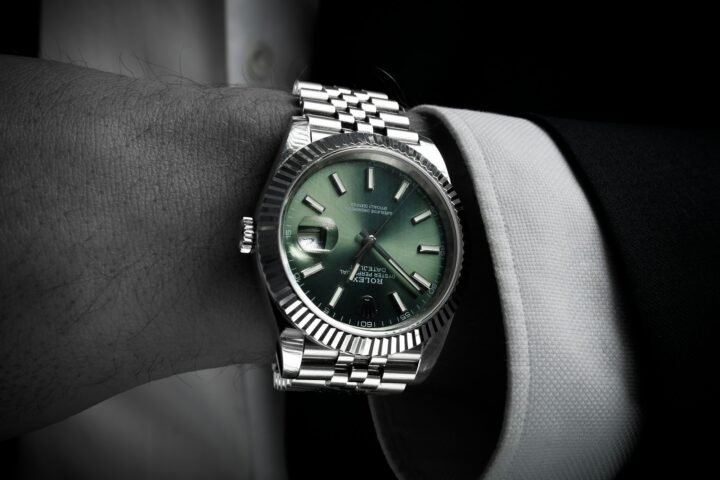
- Keep the watch quiet. A slim one on a leather strap suits the clothes, or wear none. If you own one good watch and it is a big steel diver, wear it anyway and don’t think about it again. Nobody will be looking.
- Forget about it. The reason to get all this right is so that you never have to think about it once you’re through the door. The evening is about the people in the room.
Questions people ask
Can I wear a black suit to a black-tie event?
Not if you can help it. A dinner jacket has silk lapels and braided trousers, and side by side the difference shows. If you only need it for one night, hire one and have it checked for fit.
Black or midnight blue?
Black is the rule and can never be wrong. Midnight blue is the well-regarded alternative. If this is the only one you will ever own and you worry about such things, buy black.
Do I have to wear a cummerbund or a waistcoat?
No. Debrett’s calls cummerbunds not essential and waistcoats an option. Just don’t wear both at once.
Is a pre-tied bow tie really so bad?
Nobody will ask you to leave, and some very good shops sell them. But Debrett’s says to avoid them, and learning the real thing takes one evening, so there is little reason to settle for less.
What’s the difference between black tie and white tie?
White tie is the most formal dress code there is: a black tailcoat, white marcella waistcoat, wing collar and white bow tie, for royal occasions, state dinners and some balls. It will always be stated on the invitation, so you won’t end up in it by accident.
How we chose: the dress code rules are from Debrett’s guide to events and dress codes, and the history is Henry Poole’s own account, both read on 1 November 2026. Prices and details are from the UK sites of Suitsupply, Crockett & Jones and Henry Poole on the same date, and may change. The opinions on where to bend the rules are ours. The clothes and shoes were not handled for this guide, and nobody paid to appear in it.