Your first serious watch, and how to choose it at every budget
Buy one watch well and you may never need another. What separates the heirlooms from the logos, and our pick at every price from £370 to £10,200.
A good watch is the one piece of jewellery most men wear every day. It shows at a handshake, across a dinner table and on a desk in every meeting, and it says more about your taste than almost anything else you own. The trick is not to spend the most. It is to spend once, on the right thing.
This guide covers what actually matters, how much to spend, and our pick at every budget, from a first proper watch for a few hundred pounds to the one you hand down. Every price below is the maker’s own UK list price.
| Watch | Case | Movement | UK price |
|---|---|---|---|
| Seiko Presage Cocktail Time SRPB41 | 40.5mm | Automatic, about 41 hours | £370 |
| Hamilton Khaki Field Mechanical | 38mm | Hand-wound, 80 hours | £545 |
| Tissot PRX Powermatic 80 | 40mm | Automatic, 80 hours | £640 |
| Longines Spirit | 40mm | Automatic, up to 72 hours | £2,150 |
| NOMOS Tangente 38 | 37.5mm | Hand-wound, up to 53 hours | £2,220 |
| Tudor Black Bay 58 | 39mm | Automatic, 65 hours | £4,160 |
| Grand Seiko SBGW301 | 37.3mm | Hand-wound, about 72 hours | £4,400 |
| Rolex Oyster Perpetual 36 | 36mm | Automatic, about 70 hours | £5,600 |
| Jaeger-LeCoultre Reverso Tribute Small Seconds | 45.6 x 27.4mm | Hand-wound | £10,200 |
What actually matters
Size comes first. A watch that is too big looks borrowed, whatever it cost. The number to check is not the diameter but the lug-to-lug length: the lugs should end inside the edges of your wrist, with nothing hanging over. For most men that points to something between 36mm and 40mm, which is exactly where the classics have always sat.
Then the dial. Look for one you can read at a glance and will still like in ten years. Plain, well-proportioned dials age better than busy ones, and a watch you are bored of by next summer was never a bargain.
Then the shape of your life. If you will wear one watch for everything, from the office to the beach, you want steel, a bracelet and real water resistance. If you already have something sporty and want a watch for suits and dinners, go thinner, smaller and on leather.
The brand comes last. It matters, because some makers hold their value and their reputation for decades. But buy the watch you would still choose if nobody could read the name on the dial.
Buy the watch you would still choose if nobody could read the name on the dial.
Automatic, hand-wound or quartz?
An automatic winds itself as you move. Wear it every day and it keeps going; leave it in a drawer and it stops once its power reserve runs out. A hand-wound watch needs a few turns of the crown each morning, which some men find a pleasure and others a chore. It also allows a thinner case, which is why so many dress watches are hand-wound. Quartz runs on a battery, keeps better time than either, and costs far less to look after.
For a first serious watch, we lean mechanical. Not because it is more accurate (it isn’t) but because the craft is a large part of what you are paying for, and it is what makes a watch worth keeping.
How much to spend
Less than you think, to start. Some of the best value in watches sits under £1,000, and a well-chosen watch at £500 beats a poorly chosen one at £5,000. Spend more when you know what you like and why: that is when the extra money buys finishing, history and a watch that lasts a lifetime.
Our picks: under £1,000
Seiko Presage Cocktail Time SRPB41, £370
The dress watch that punches far above its price. The dial is the reason to buy it: textured, layered and catching the light in a way watches costing ten times as much often don’t. It is 40.5mm across and 11.8mm thick, with Seiko’s 4R35 automatic movement and a power reserve of about 41 hours. The compromises are honest ones: a Hardlex crystal rather than sapphire, and water resistance of 5 bar, so think splashes, not swimming.
Hamilton Khaki Field Mechanical, £545
The best everyday watch for the money, and the one we would give a younger brother. A 38mm steel case, only 9.5mm thick, a sapphire crystal and a hand-wound H-50 movement with an 80-hour power reserve, so it will still be running if you forget it for a weekend. Its roots are in military field watches, which means it looks right with a jumper, a Barbour or an open-necked shirt. It is water resistant to 5 bar.
Tissot PRX Powermatic 80, £640
If you want steel on steel, this is the one. The PRX has the integrated-bracelet look of watches that cost many times more, in a 40mm case just under 11mm thick, with a quick-release bracelet. Inside is the Powermatic 80 automatic, so named for its 80-hour power reserve, and it is water resistant to 10 bar (100m). It is the most versatile watch on this list under £1,000.
Our picks: £1,000 to £3,000
NOMOS Tangente 38, £2,220
The thinking man’s dress watch. NOMOS builds its own movements in Glashütte, the home of German watchmaking, and the Tangente has been its signature since the 1990s. It is 37.5mm wide and just 6.8mm thick, so it slides under a shirt cuff without a second thought. The hand-wound DUW 4001 calibre, visible through a sapphire case back, runs for up to 53 hours. Its clean Bauhaus dial looks as modern now as it did thirty years ago, which is the whole point.
Longines Spirit, £2,150
The do-everything Swiss watch at a sensible price. A 40mm steel automatic with a date, a silicon balance spring that shrugs off magnetism, a power reserve of up to 72 hours and water resistance of 10 bar. It draws on Longines’s pilot’s watches of the early twentieth century, so it reads cleanly and wears easily. If the Tangente is for the man who lives in suits, the Spirit is for the man who doesn’t always.
Our picks: £3,000 to £6,000
Tudor Black Bay 58, £4,160
If you buy one watch for the rest of your life and want it to go anywhere, start here. The Black Bay 58 is a tribute to Tudor’s divers’ watches of the 1950s, now in its latest form: 39mm, 11.7mm thick, waterproof to 200m, with Tudor’s own MT5400-U movement, certified by both COSC and METAS, and a 65-hour power reserve. The T-fit clasp adjusts on the wrist without tools, which matters more than it sounds on a hot day. It costs £4,160 on the five-link bracelet, and less on rubber.
Grand Seiko SBGW301, £4,400
The connoisseur’s choice: the watch that people who know watches nod at. Grand Seiko’s finishing, particularly its razor-sharp polished hands and markers, is as good as anything in Switzerland at the price. The SBGW301 is a pure dress watch, 37.3mm across, with the hand-wound 9S64 calibre (about three days of power reserve) on show through a sapphire case back. Note that it is rated only as splash resistant: this is a watch for dinners, not for the sea.
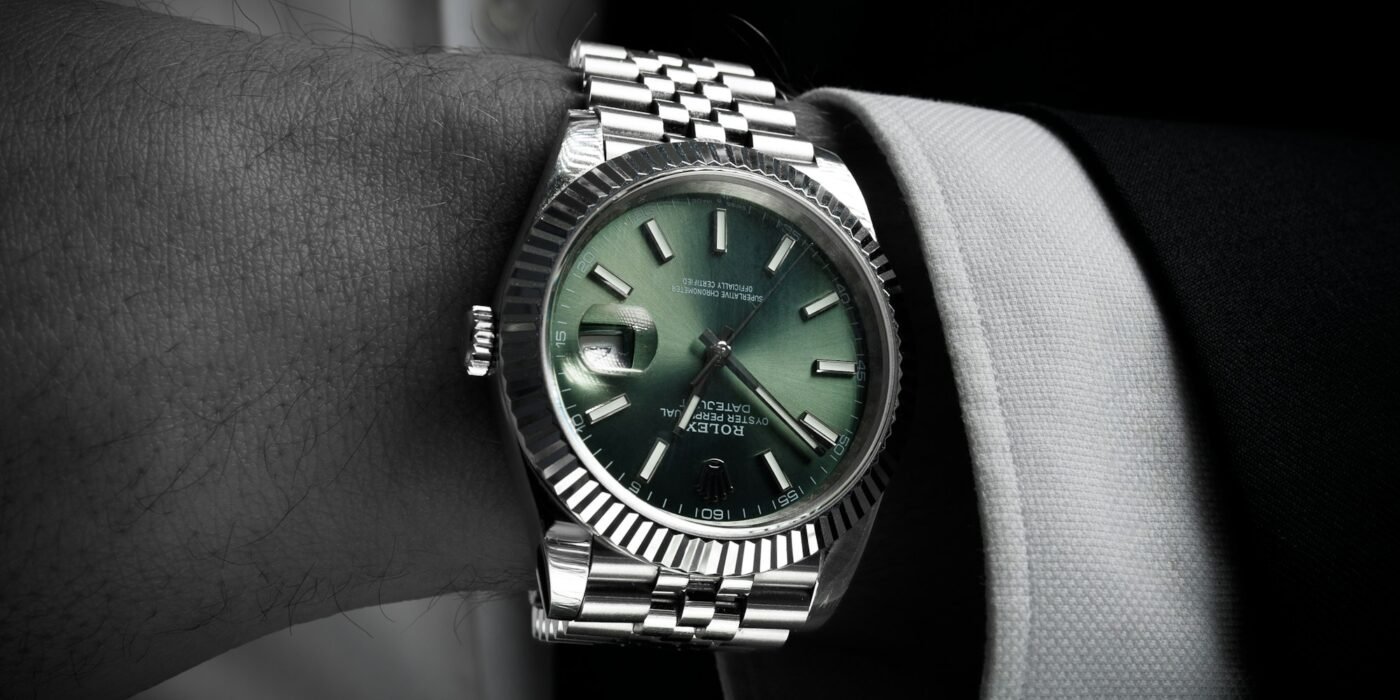
Rolex Oyster Perpetual 36, £5,600
The most recognisable shape in watchmaking, in its simplest and arguably best form: no date, no bezel, nothing to explain. It is 36mm in Oystersteel, waterproof to 100m, with the Rolex calibre 3230 automatic (about 70 hours of power reserve) certified to −2/+2 seconds a day once cased. It is the watch that fits every occasion and never needs defending. Rolex sells only through its authorised retailers, so start there rather than with a dealer advertising one at a premium.
The one you hand down
Jaeger-LeCoultre Reverso Tribute Small Seconds, £10,200
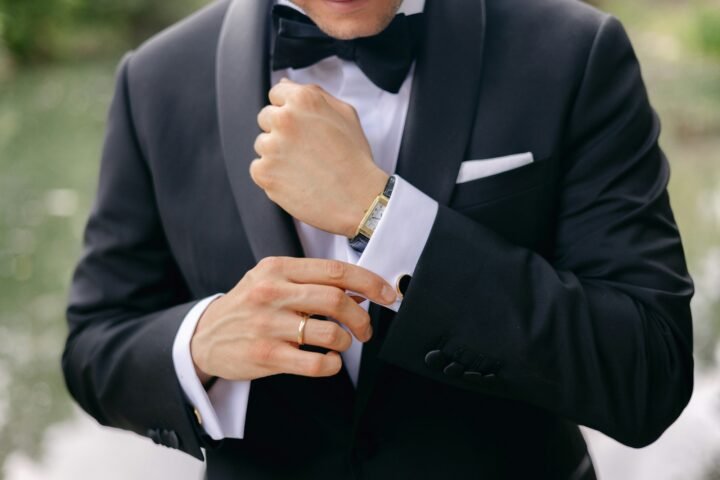
The Reverso was designed in 1931 for polo players: the case flips over to protect the glass. Nearly a century later it remains one of the great rectangular watches and one of the few designs that looks equally right with black tie and a cashmere jumper. The steel Tribute measures 45.6mm by 27.4mm and is driven by Jaeger-LeCoultre’s hand-wound calibre 822. It is a watch with a story, and the reverse side is blank, which makes it the obvious candidate for an engraving your grandchildren will read.
Before you buy
- Try it on with the cuffs you actually wear. A watch that disappears under a shirt cuff in the shop may not in real life, and the other way round.
- Ask about servicing. Mechanical watches need a service every few years. Ask the maker or retailer how often and what it costs before you buy, not after.
- Buy from an authorised retailer or the maker, or from a seller who will put the watch’s history and paperwork in writing. A manufacturer’s guarantee is worth more than a small discount.
- Keep the box and papers. They matter if you ever sell, and they matter to whoever you hand it to.
- Think about the strap. A new strap can change a watch completely, and it costs far less than a new watch.
Questions people ask
What size watch should a man wear?
Whatever sits inside the edges of his wrist. For most men that is 36mm to 40mm in diameter, but check the lug-to-lug length too: a 40mm watch with long lugs can wear larger than a 41mm with short ones.
Is a Rolex a good first watch?
It can be, if you already know it is the watch you want. If you are not sure yet, start with something under £1,000, wear it every day for a year, and you will know exactly what you want next.
Should my first watch have a bracelet or a strap?
If it is your only watch, a steel bracelet is the safer choice: it copes with water, heat and everyday knocks. Leather looks dressier but wears out, so treat it as a part you will replace.
How we chose: these picks are based on each maker’s own specifications, and the watches were not handled for this guide. Prices are UK list prices taken from each maker’s own website on 31 October 2026; prices elsewhere differ, so check the maker’s site for your country.