How to host a dinner party at home, and be there for it
Do the work before anyone arrives, so that you can be in the room once they have. Who to ask, what to cook, how to keep people safe and fed, and how to end the evening well.
A dinner party has a bad reputation, and it earned it. Somewhere along the way it came to mean three ambitious courses, a host who appears only to apologise, and guests making polite conversation while something burns next door. None of that is required. All your guests really want is a good evening, food that’s hot, and to feel that you’re pleased they came.
So the whole job comes down to one principle: do the work before anyone arrives, so that you can be in the room once they have. Almost everything below follows from it, including the menu.
| When | What to do |
|---|---|
| Two weeks before | Choose the guests and invite them. Ask about allergies and what they don’t eat. |
| A week before | Settle the menu. Check you have enough plates, glasses, chairs and cutlery. |
| Two days before | Do the big shop, including the wine, and something good that contains no alcohol. |
| The day before | Cook whatever can be made ahead. Clean. Lay the table if you can spare it. |
| The morning | Buy bread and flowers. Chill the drinks. Clear the fridge, the dishwasher and the bins. |
| An hour before | Change your clothes. Put on the music, light the candles and pour yourself a glass of water. |
Who to ask
Six people is the number to aim for, or eight if your table allows it. At six everyone can share one conversation. Much beyond eight the table usually splits in two, and you have to cook for a crowd as well.
Think about the mix before you think about the food. Invite at least one person who’s good at talking to strangers, and don’t fill the table with colleagues unless you want to discuss work until midnight. If you’re inviting two people who have a history, the kind thing is to tell each of them. If a guest would know nobody else, introduce them properly when they arrive, with one thing they might talk about.
Invite people a couple of weeks ahead, and be clear about the time and how formal it is. “Dinner at mine on the 21st, 7.30 for 8, nothing smart” tells them everything. It also gives them something to answer, and a good guest will reply within a day.
Choose a menu that leaves you free
Here’s the test for any dish: how long does it keep you out of the room? A braise, a slow-roast shoulder or a fish pie can be made in advance, and most of them are happy to wait if someone’s late. A risotto needs you at the stove until the moment it’s served, and steaks for six need a professional kitchen. Save those for when you’ve got nothing to prove.
Allow yourself one thing that needs last-minute attention, and no more. A reliable shape looks like this:
- With drinks: something you can buy. Good olives, nuts, or crisps in a decent bowl. Nobody will mark you down for it.
- Starter: cold and ready on the plate, or skip it altogether. Two courses done well beat three done nervously.
- Main: one pot or one tin from the oven, with a salad and something to soak up the sauce.
- Pudding: made the day before, or bought from someone better at it than you are. Then cheese, if you like, which takes no skill beyond remembering to take it out of the fridge in time.
Never cook something for the first time on the night. Try it on a quiet weekend, when the worst that can happen is a takeaway.
Ask about allergies, and take the answer seriously
Ask every guest when you invite them, in so many words: “Is there anything you can’t eat or don’t eat?” Then write down the answers. The NHS lists cows’ milk, eggs, peanuts, tree nuts, shellfish and wheat among the most common causes of food allergy, and notes that people can be allergic to any food. Keep the packaging of anything you bought, so that you can check the ingredients if someone asks.
For a guest with a serious allergy, the simplest and kindest thing is a menu that’s safe for the whole table, rather than one plate that looks different. If you aren’t confident you can manage it, say so before the evening and ask what they’d suggest. They’ll have had this conversation many times.
Keep the food safe
It’s unglamorous, and it’s the one part of the evening that can properly go wrong. The government’s food safety guidance is straightforward. Your fridge should be between 0 and 5°C. Keep chilled food out of it for as short a time as possible while you prepare it, and for four hours at most. Don’t put hot food in the fridge: let it cool at room temperature and get it in within one to two hours, in smaller portions if you need it to cool faster. Eat leftovers within 48 hours, or freeze them.
If you’re cooking the day before, that’s the routine that matters. Cool it, chill it, then reheat it properly on the night.
Lay the table once, and lay it well
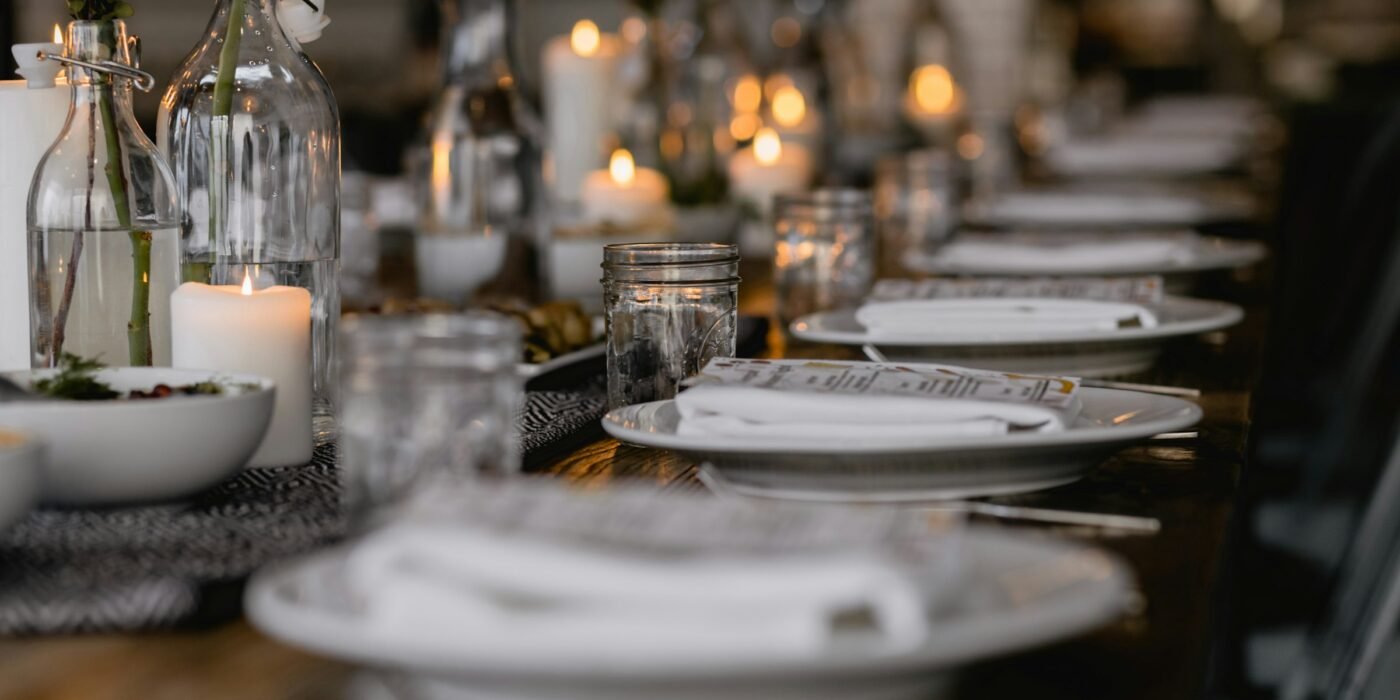
Nothing here needs to be expensive or matching. Cutlery runs from the outside in, forks on the left and knives on the right, with only what people will actually use. Glasses sit above the knives, and every place gets a water glass. Keep flowers and candles low enough for people to see each other over them, and choose candles without scent, because they’re competing with your dinner.
Put the sociable guests in the middle, and split up couples, who’ve heard each other’s stories. Say where people are sitting; few things are less relaxing than being told to sit anywhere. Then turn the music down lower than you think it should go. If people are leaning in to hear each other, it’s too loud.
Your guests won’t remember the sauce. They’ll remember whether you sat down.
Pouring without pushing
Offer a drink the moment people arrive, and make sure that an alcohol-free option is a proper one, not a glass of tap water handed over like a consolation. Keep water on the table all evening. For wine, a bottle between two is a generous allowance, and you can always hold some back. It’s worth knowing what that means: by the NHS formula, half a 750ml bottle at 13.5% is about five units, against guidance not to regularly drink more than 14 a week. So a good host keeps glasses filled but doesn’t race them, and nobody should have to explain why they’ve stopped.
The rules of The Code are plain on this. Never press a drink on someone who has said no, and drink better, not more. If you need help with what to pour before dinner, our guide to the home bar covers it.
Be in the room
Have your own drink poured and the kitchen under control before the first guest rings the bell. Someone will arrive early, and it’s easier to welcome them if you aren’t holding a hot tin. When people offer to help, give them a small job, as it’s often the shy ones who ask. Grating cheese is an excellent way to survive a room full of strangers.
At the table, your job is to run the conversation without seeming to. Bring in whoever has gone quiet: “You’ve just come back from Lisbon, haven’t you?” Let people finish their sentences. Change the subject when one has gone on too long, and steer gently away from any argument that has stopped being fun. Keep your phone in your pocket, and don’t apologise for the food. If you tell people the meat is overdone, they’ll spend the rest of the course checking. And if something really does go wrong, laugh and order pizza, because a host who stays cheerful through a disaster gives people a better story than a perfect roast would.
Sit down when the food does, and pick up your fork promptly, because your guests are waiting for you to start. Leave the washing up where it is, as far as you can stand to. Stacking plates at the far end of the kitchen while your guests sit talking to each other tells them the evening is over.
How to end it
Most evenings end themselves, usually when someone looks at the time and says they ought to go. If it’s very late and you’re flagging, offer a last coffee or a glass of water and start to sound as if you’re winding up. Nobody needs to be thrown out.
Before anyone leaves, think about how they’re getting home. Have the number of a local taxi to hand, offer the sofa if you’ve got one, and see people to the door rather than waving from your chair. Making sure everyone gets home is the last job of the night, and it comes before the dishes. In the morning, a short message saying you loved having them costs nothing, and it’s pleasant to be the one who sends it first.
Questions people ask
How many courses do I need?
Two is plenty: a main and a pudding, with something to nibble beforehand. Add a starter only if it’s cold and already made.
What should I do if a guest offers to bring something?
Say yes, and name something specific that you won’t have to manage: a bottle, some cheese, chocolates for after the meal. If someone brings a bottle you hadn’t planned for, thank them warmly. You’re not obliged to open it that night.
What if someone turns up very late?
Give it about 20 minutes beyond the time you planned to eat, then go ahead and keep a plate warm. It’s unfair to spoil dinner for everyone else, and it spares the late guest from walking in on a hungry table.
Do I need matching plates and proper glasses?
No. Clean, plain and enough of them is all that matters. Borrow from a neighbour if you’re short. Plain white plates and simple wine glasses will take you a long way.
What should I wear?
A notch smarter than you’ve asked your guests to be, and something you can cook in. Put it on after the messy part. The host who answers the door clean, calm and dressed has already done half the work.
Then, when it’s all over, you can sit among the wreckage and think about who to ask next time. And when you’re next the guest, you’ll know what the evening took, and why it’s worth writing to say so. Our guide to table manners covers the other side of the table.
How we wrote this: the advice on hosting is our opinion, drawn from long-established etiquette and not from any particular party. The food safety points are from the Food Standards Agency’s guidance on chilling, freezing and defrosting food on GOV.UK, the allergy information from the NHS page on food allergy, and the unit figures from the NHS page on alcohol units, all read on 4 November 2026. For a medical question about allergies, ask a doctor. Nobody paid to appear here. For people of legal drinking age: please drink responsibly.